$1 million of American Rescue Plan Act (ARPA) funds have been allocated to assist residents with past-due water accounts.
While you are encouraged to complete the application online, paper applications will be available at the Water Division, Kingshighway Office, and at the following St. Louis Public Libraries:
St. Louis Public Libraries
Assistance is being distributed based on available funding on a first- come, first-served basis. The program will no longer be available when funds run out.
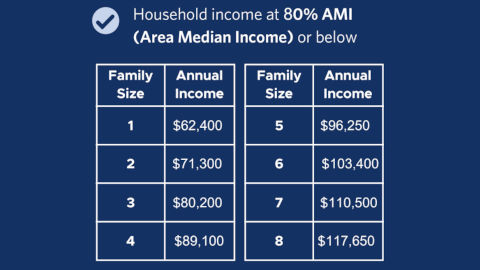
The St. Louis Water Utility Assistance Program also includes a financial literacy component and mandatory enrollment in a repayment plan to ensure that residents can pay off their water debt in full.
Funds will be awarded on a first-come, first-served basis and consist of a one- time credit of up to $500.
Eligibility
Payments may be made at the following locations:
Payments may also be made securely online:
Checks, money orders, and traveler’s checks are accepted. Cash is only accepted in the Collector of Revenue’s office.
All checks must be made payable to “Gregory F.X. Daly, Collector of Revenue.”
Yes!
A Direct Payment Plan can be employed, which allows you to pay water bills directly from your checking or savings account. We will send you a billing notice that gives you all the information you receive now, but the payment amount is automatic. This service is free and you can cancel anytime. To receive a form for the Direct Payment Plan, call the St. Louis Collector of Revenue’s Office.
To enroll in auto pay using a credit or debit card please visit the PayitStLouis website. Fees may apply.
To maintain a good credit rating, you should pay your bill within twenty (20) days of billing date.
We know that navigating financial difficulties can be stressful, and we are committed to providing solutions. To avoid immediate water service disconnection,
please contact us to discuss your situation and explore the various resources available to you. Please reach out to our customer service team today to discuss options in ways we can help you get back on track with your water account. We are here to listen and help find a solution that works for you.
Repayment plans are available through the Collector of Revenue’s Office. These plans can help you manage your outstanding balance over time.
We are dedicated to serving our community, and that includes supporting our customers through difficult times.
We can help. Please contact us today.
To pay your bill through the Water Division:
To pay your bill through the Collector of Revenue:
To pay using a credit or debit card please visit the PayitStLouis website. Fees may apply.
Bills are mailed out to customers quarterly (every 3 months).
Water rates are set by the Board of Aldermen.
These rates are established to meet the financial needs to maintain, operate, and improve the water works facilities of the City.
If you are a residential water user, contact customer service to schedule a fixture count inspection.
Once a fixture count inspection has been completed the Water Division will compare your estimated flat rate against the current average water bill to determine your eligibility.
To calculate what your flat rate and metered rate would be, view our Water Rates.
For a meter to be set a meter box must be installed by a licensed plumber on the outside of your property.
Once a meter is ready to be set, please contact Customer Service at (314) 771-2255 for further assistance.
Water Line Insurance covers the maintenance of eligible residential customers’ water lines from the main in the street up to and including the customers’ stop boxes.
The residential property owners remain responsible for the maintenance of the line from the stop box to the house/building. The property owner actually owns the entire service line, including that portion covered by the insurance program. The insurance program, therefore, only covers certain maintenance and repair costs; it does not cover liability for damage or accidents.
Sewer and Water bills are separate because they are maintained by two different entities.
The Metropolitan St. Louis Sewer District manages the sewer and sewer treatment facilities. The City of St. Louis Water Division, governed by the Board of Alderman, provides water service.
If your water service has been turned off due to a delinquent bill, service can only be restored after we have received the following:
Payment confirmation
A completed, signed turn-on slip
Please have money order or check for the amount of your bill plus the service charge, and your water service will be restored as soon as possible. (There may be a delay in the restoration of water service at night depending on work loads or emergency repair activities.)
You will be required to sign a note of responsibility authorizing the Water Division to turn the water service back on. This authorization releases the Water Division from liability for property damage which could occur as a result of the water service being restored.
If your water service is shut off for a plumbing emergency and you decide to leave it off, you will continue to be billed for service until we receive a written request to terminate the account.
Water service may be restored at the following locations:
Your water will be disconnected if you fail to pay your bill. If you want to have your service disconnected for any other reason, please contact the Water Division in writing. Your letter can be mailed to Customer Service.
Whether you move to a new location inside or outside of our service area, please notify us, in writing, when you are moving so we may get a final read. If you know who is taking possession, please let us know this so their service will not be interrupted. Please send this information to Customer Service, including your address and account number.
If you are moving to a new address within our service area, we will arrange at the same time to open a new account for you.
You are responsible for all bills at your old address until we receive notification from you and can arrange for an actual final read.
In November 2024, the City of St. Louis Water Division contacted through the mail all property owners whose service line material is categorized as lead, galvanized requiring replacement, or unknown. Water customers were asked to respond to a survey online or by phone to help the Water Division update its inventory.
The Missouri Department of Natural Resources has created this video guide to help identify your service line material.
Service lines are entirely owned by the property owner.
The City of St. Louis Water Division is aggressively pursuing grant funding to pay for replacement of lead service lines on behalf of the property owners; this program will require applications and have eligibility requirements. At this time, City ordinances do not allow for the replacement of privately owned lead service lines using revenues collected through water rates. The City is developing a zero-interest loan program to assist property owners who choose to replace their lead service lines at their own expense.
Currently, property owners are responsible for replacing service lines, because service lines are owned by the property owner.
However, the City of St. Louis has applied for federal funding, through the Bipartisan Infrastructure Law, to provide financial assistance for qualifying property owners seeking to replace lead service lines. While the City is developing our lead service line replacement plan, we cannot currently give more specific information about this assistance until the plan has been completed and a replacement program to distribute the funding has been implemented.
Yes!
Exposure to lead in drinking water can cause serious health effects in all age groups. Infants and children can have decreases in IQ and attention span. Lead exposure can result in new learning and behavioral problems or exacerbate existing learning and behavioral problems. The children of women who are exposed to lead before or during pregnancy can have an increased risk of these adverse health effects. Adults can have increased risks of heart disease, high blood pressure, kidney, or nervous system problems.
Lead in drinking water, although rarely the sole cause of lead poisoning, can significantly increase a person’s total lead exposure. Infants who drink baby formulas and concentrates that are mixed with water containing lead are particularly at risk. The EPA estimates that drinking water can make up 20% or more of a person’s total exposure to lead.
For more than 20 years, the City has been treating its water with an optimized corrosion control treatment strategy, which minimizes the absorption of lead from customers’ service lines or internal plumbing. The Water Division routinely tests City water, and this treatment has been shown to be effective in keeping lead levels in customers’ homes well below the U.S. Environmental Protection Agency action level of 15 parts per billion, and also well below the 10 ppb action level set to take effect in 2027. The Water Division tests water quality at the treatment plants multiple times a day and tests the water at a representative sample of homes with lead service lines to meet the EPA’s regulatory requirements for compliance.