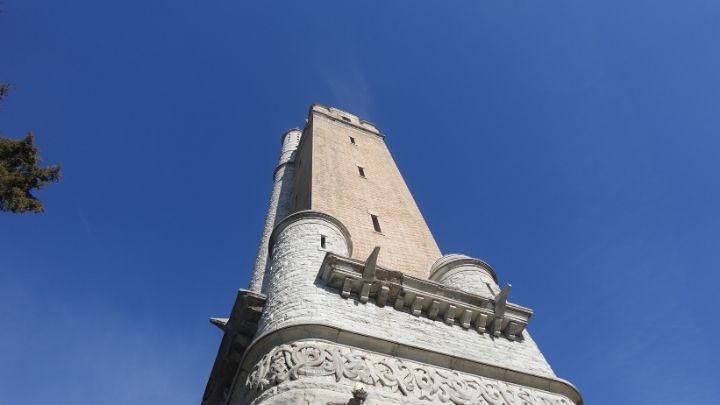
A recent report studying the potential outlay for much-needed repairs to the historic Compton Hill Water Tower assesses the project will cost an estimated $6 million.
Prepared by St. Louis-based architectural and planning firm GRICE | TRIVERS in cooperation with Arsee Engineers, Inc., a structural engineering firm located in Fishers, Indiana, a comprehensive report identified issues in need of addressing by focusing on three primary components: condition assessment, estimate of cost and recommended repairs, and preliminary occupancy analysis.
The report notes several areas of concern including shifting walls, deteriorating masonry throughout, and the need for both roof and gutter repair. Numerous limestone and brick cracks of varying depths and lengths permeate the structure including a cascading network of fissures covering the façade, leading to potential instability of the structure. These collective issues forced the closure of popular public tours of the tower in 2015.
The City of St. Louis Water Division, 6th Ward Alderwoman Daniela Valezquez, and the Water Tower and Park Preservation Society collectively financed the report and intend to explore supplemental funding sources, partnerships, and available grants
Built between 1897 and 1899, the South St. Louis monument stands within Reservoir Park, a noted urban greenspace on Grand Avenue. The Compton Hill Water Tower was designated a City Landmark in 1966 and added to the National Register of Historic Places in 1972. Recognized for its stunning terra cotta dome and sturdy brick and limestone foundation, the Tower has undergone many repairs and renovations throughout the years, including efforts to address issues of crumbling or cracked brick and limestone in 2005 and then again in 2017.
Although decommissioned from service in 1929, the Tower joins the Grand Avenue Water Tower in the College Hill neighborhood and the Bissell Street Water Tower, popularly known as the “New Red Tower”, as three of the only seven remaining standpipe water towers in the country.